
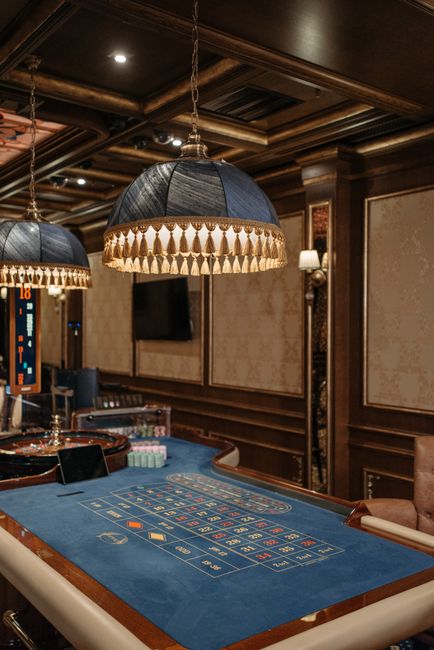
Every gambler has that moment. You're three spins into a bonus round, up 40x, and the thought hits you: why don't I just walk away right now? The answer, unfortunately, is that the same math that built that bonus round is already working against you before your finger leaves the button. Understanding the house edge isn't about becoming cynical — it's about becoming the kind of player who knows exactly what they're paying for entertainment.
House Edge: The Only Number That Actually Matters
Every game in a casino, online or on a riverboat in Louisiana, is built around a mathematical advantage for the operator. That advantage is called the house edge, and it's expressed as the percentage of every dollar wagered that the casino expects to keep over the long run. American roulette sits at a hefty 5.26% thanks to the double zero. European roulette? Just 2.7%. Blackjack played with basic strategy drops the edge to around 0.5%, which is why card counters exist. Slot machines, by contrast, typically run anywhere from 2% to 15% depending on jurisdiction and volatility.
Here's the part most players miss: the house edge doesn't care about your session. You can win for six straight hours and lose it all in eleven minutes. The edge only reveals itself over tens of thousands of wagers. That's cold comfort when you're chasing a loss, which is exactly the emotional reaction the whole system is designed to exploit.
Slots: RNGs, RTP, and the Volatility Trap
Modern slots don't have a memory. Every spin runs through a Random Number Generator, a piece of software that cycles through thousands of numbers per second and locks one in the instant you hit the button. A slot that just paid a $10,000 jackpot has the exact same odds on the next spin as it did before. Return to Player (RTP) is the flip side of the house edge — a slot with a 96% RTP keeps 4% over the long haul.
Where players get hurt isn't the RTP, though. It's volatility.
- Low volatility slots pay small amounts frequently — think Starburst's frequent little wins. Good for stretching a bankroll, lousy for chasing a headline payday.
- High volatility slots like Money Train or San Quentin can go hundreds of spins without a meaningful hit, then pay 5,000x in one go. Players who don't budget for the dry spells blast through their balance before the big one lands.
- Bonus buy features, now standard on most high-volatility titles, let you pay 100x your stake to jump straight into the feature. Buy three and you've spent 300x — and there's no guarantee any of them pays back what you put in.
If you play slots, pick volatility that matches your bankroll. A $50 bankroll on 96% high-volatility slot is a lottery ticket. The same $50 on a lower-volatility game at $0.20 a spin gives you room to actually experience a session. สล็อต is a solid starting point for anyone new to this.
Table Games and Poker: Where Skill Actually Moves the Needle
Blackjack is the only mainstream casino game where perfect play drags the house edge below 1%. Basic strategy is a chart telling you exactly when to hit, stand, double, or split based on your hand versus the dealer's upcard. Memorize it, and you're essentially gambling at coin-flip odds. You won't win every session, but you've stripped the casino's advantage to a sliver.
Poker is a different animal entirely. It's the only game in the building where you're not playing against the house — you're playing against other people, and the house just skims a rake. That changes the math fundamentally, because a skilled player can consistently beat weaker opponents. The margin for most winning cash game players sits around 2 to 5 big blinds per 100 hands. It's grind money, not yacht money, and it requires studying ranges, pot odds, position, and bankroll management for months or years before the edge materializes.
Sports betting falls somewhere between. The vig — usually around 4 to 5% built into a standard -110 line — functions like a rake. Beating it consistently means finding lines that are mispriced by the market, which is harder than it looks now that sportsbooks use sharp algorithms... but nowhere near impossible.
Bankroll Management: The Discipline Nobody Wants to Talk About
You can know every number in this article and still lose your rent money by Friday. Bankroll management is unglamorous and it's the single biggest differentiator between players who last and players who don't. A few rules that actually work:
- Never gamble money you need. If losing it would change your month, it's not a bankroll — it's a bill.
- Set a session loss limit before you log in. Not "around $200" — an exact number. Walk away when you hit it, no negotiating with yourself.
- Scale your stakes to your bankroll. A common rule is 1 to 2% of your total bankroll per bet for cash games, or around 50 to 100 buy-ins for tournaments.
- Take profits off the table. If you triple your session buy-in, pull the original stake out. Locking in money is the only guaranteed win in gambling.
Boredom and tilt are the two biggest bankroll killers. If you're betting to feel something rather than because the spot is genuinely good, you're not gambling — you're paying for entertainment at casino prices.
Bonuses, Rakeback, and the Fine Print
Online casino bonuses are real money with strings attached. A 100% match up to $500 with a 40x wagering requirement on slots means you'd need to wager $20,000 before you can withdraw a cent of that bonus. Rakeback deals, cashback offers, and reload bonuses are often more valuable than welcome packages because they don't carry the same wagering traps. Read the terms. Every operator is counting on you not to.
Sports betting promos are usually better, and matched betting — laying off the same outcome on an exchange to guarantee a small profit — is a legitimate, if tedious, way to extract value from welcome offers. An estimated six-figure community of matched bettors does exactly this, though most books now restrict accounts that show sharp behaviour.
The Player Who Actually Wins
Nobody beats the house edge over an infinite number of hands. That's not pessimism, it's arithmetic. What a smart player does instead is treat gambling as a cost-controlled hobby with a shot at an outlier payout. They choose games with the lowest edges, they play stakes that don't sting, they exploit promotions where the math genuinely tilts their way, and they stop the moment the entertainment value disappears. The players who lose aren't the ones who don't understand the math — they're the ones who do, and choose to ignore it anyway. The house always wins in the end, but within any given session, discipline is the only real edge you control.


Zhon Andarson
Coding is used in almost all aspects of life and work now, be it directly or indirectly. It’s not just for companies in the tech sector. “An increasing number of businesses rely on computer code,
Andro Smith Doe
Coding is used in almost all aspects of life and work now, be it directly or indirectly. It’s not just for companies in the tech sector. “An increasing number of businesses rely on computer code,